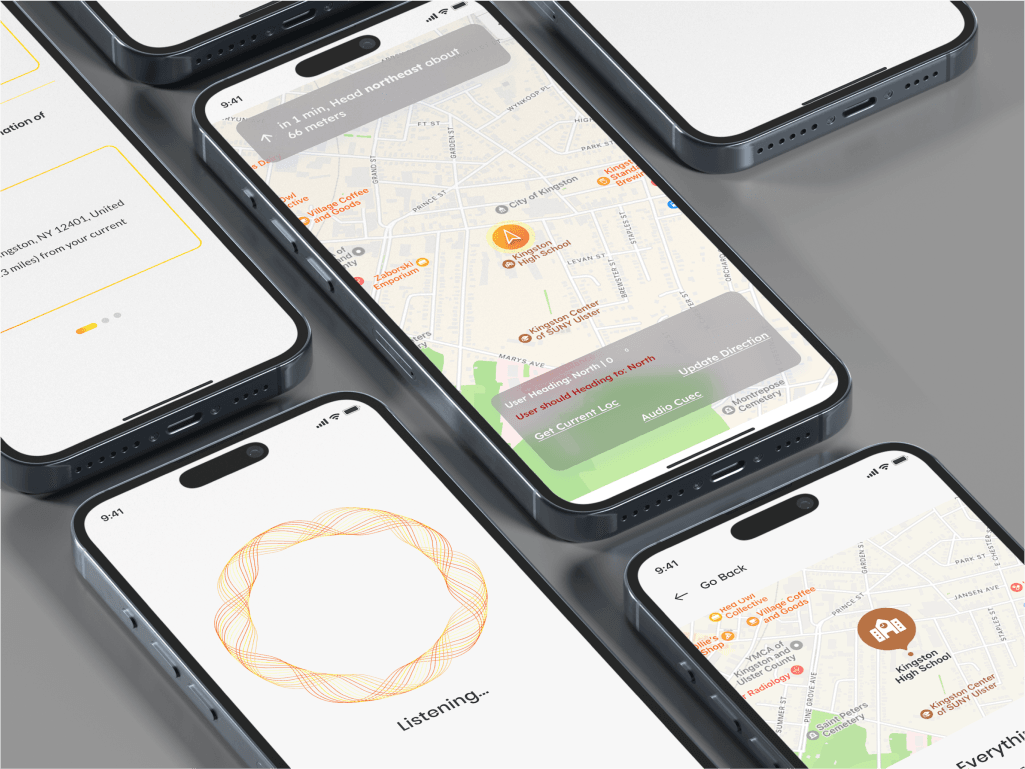
Directional Mobile App for Visually Handicapped Individuals
Google Maps for the Blind
| CLIENT | A Singapore-based Company |
| COUNTRY | Undisclosed |
| SECTOR | Assistive Technology |
| SERVICE | Mobile App Development, UX Research, Accessibility Development |
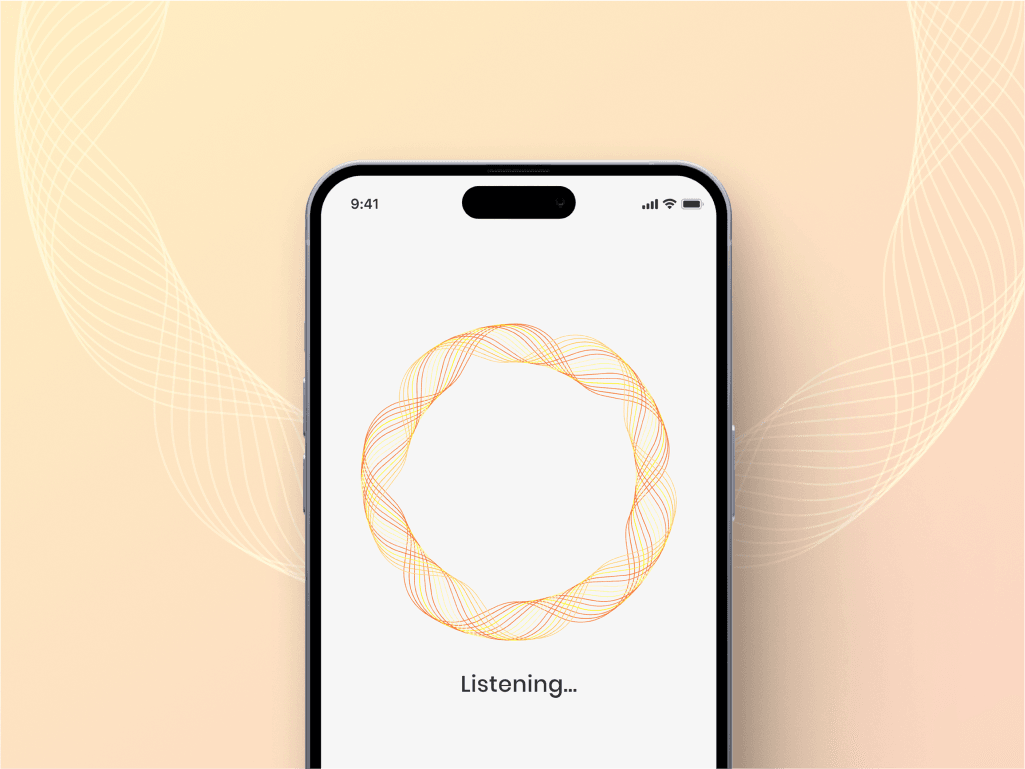
Our client is a Singapore-based company that is in the business of creating out-of-norm experiences. We worked as a red team software partner (against an internal blue team) to deliver a navigation app, built over Google Maps, tuned for use by visually handicapped individuals.
Project Description
This product exemplifies a user-centric approach to product design and development, particularly in the field of assistive technology.
We were tasked with creating a robust and accessible mobile app that could empower visually handicapped individuals to navigate around with greater independence through the use of directional sounds – a concept common first-person shooter games.
Our team commenced the project with thorough research and understanding of the unique needs of blind users and their challenges in using smartphone apps that have been designed for sighted persons.
The effort involved extensive user interviews, usability testing, and consultations with experts in accessibility and assistive technology.
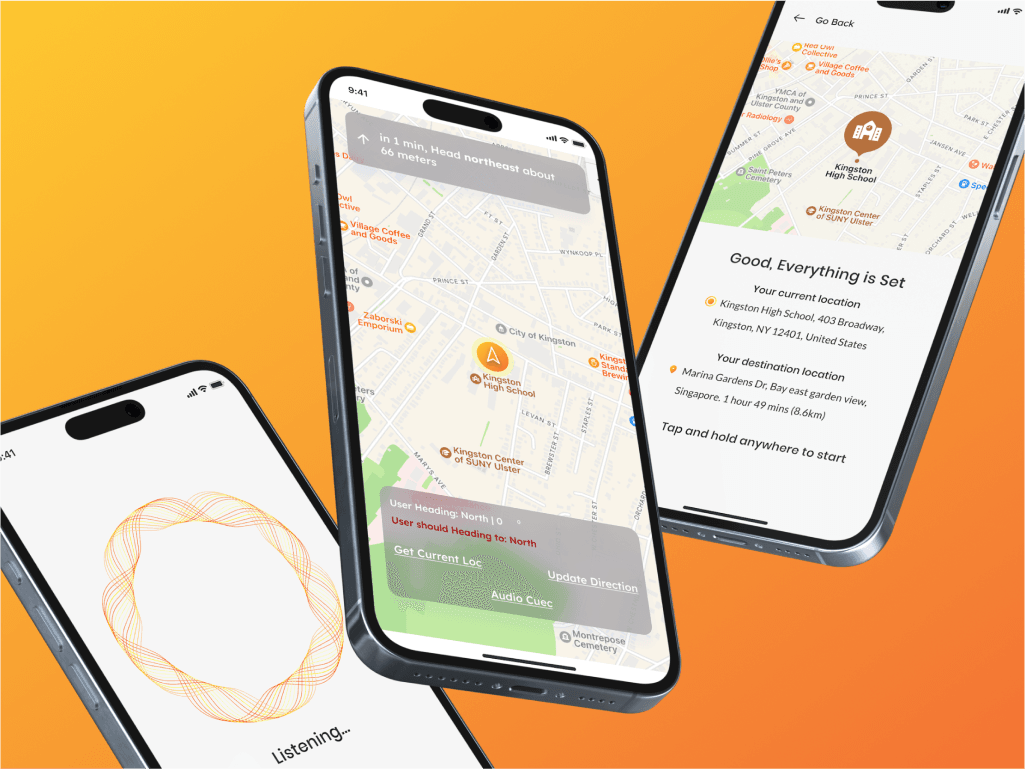
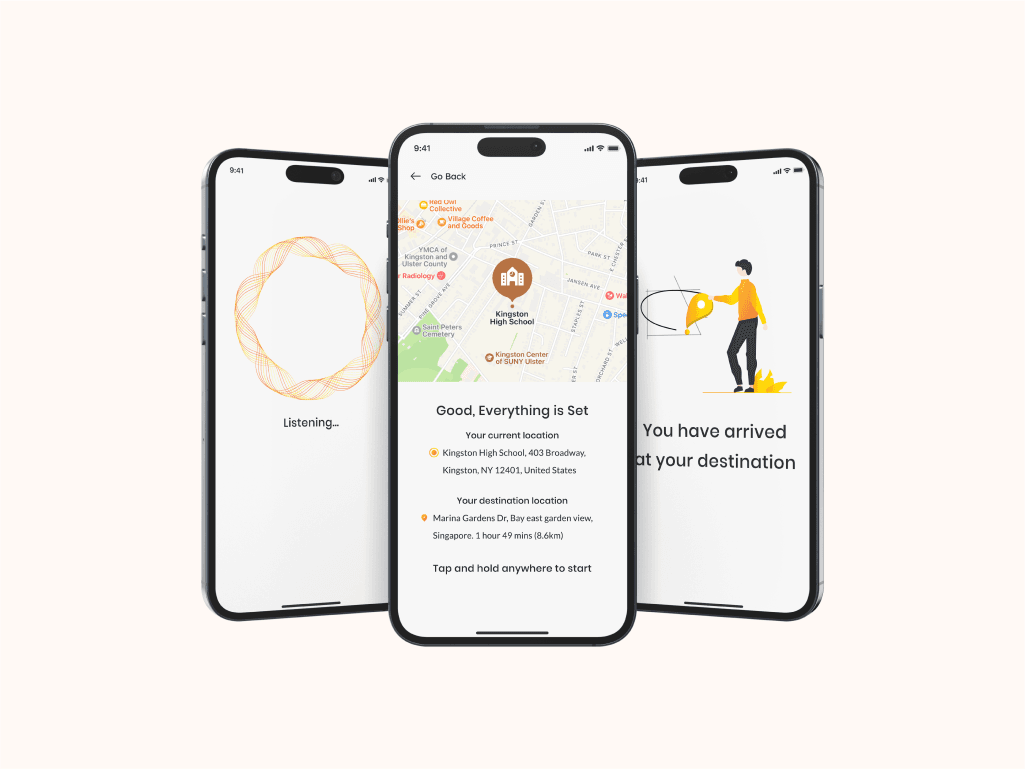
The resulting app incorporates several key features to facilitate navigation for blind users:
- Text-to-Speech for Directions and Navigation: Provides clear, spoken directions to guide users through their environment.
- Speech-to-Text from Users: Allows users to input commands and queries through voice, enhancing ease of use.
- Voice-Controlled Interface: Ensures the app can be operated entirely through voice commands, minimizing the need for physical interaction.
- Directional Audio Feature: Utilizes spatial audio to give users a sense of direction, improving spatial awareness.
- Integration with iOS and Android Speech Recognition Features: Leverages native speech recognition capabilities, VoiceOver and TalkBack, of respective mobile operating systems for accurate and reliable voice input and accessibility features.
Developing an app for visually handicapped users presented unique challenges, particularly in ensuring the user interaction was intuitive and the voice commands were responsive and accurate.
Our team focused on creating a flexible architecture that could adapt to future technological advancements and changes in user needs.
The biggest challenge and success was to understand how visually impaired individuals use smartphones or to navigate around the city without the sense of sight.
The final product not only met but exceeded the expectations of our client, delivering an accessibility-friendly navigation app that significantly enhances the independence and quality of life for visually handicapped individuals.
Stacks Used

Nextjs

Typescript

Shopify API

MongoDB

NodeJs

Docker

AWS Lightsail

AWS Route 53

GitHub Actions